
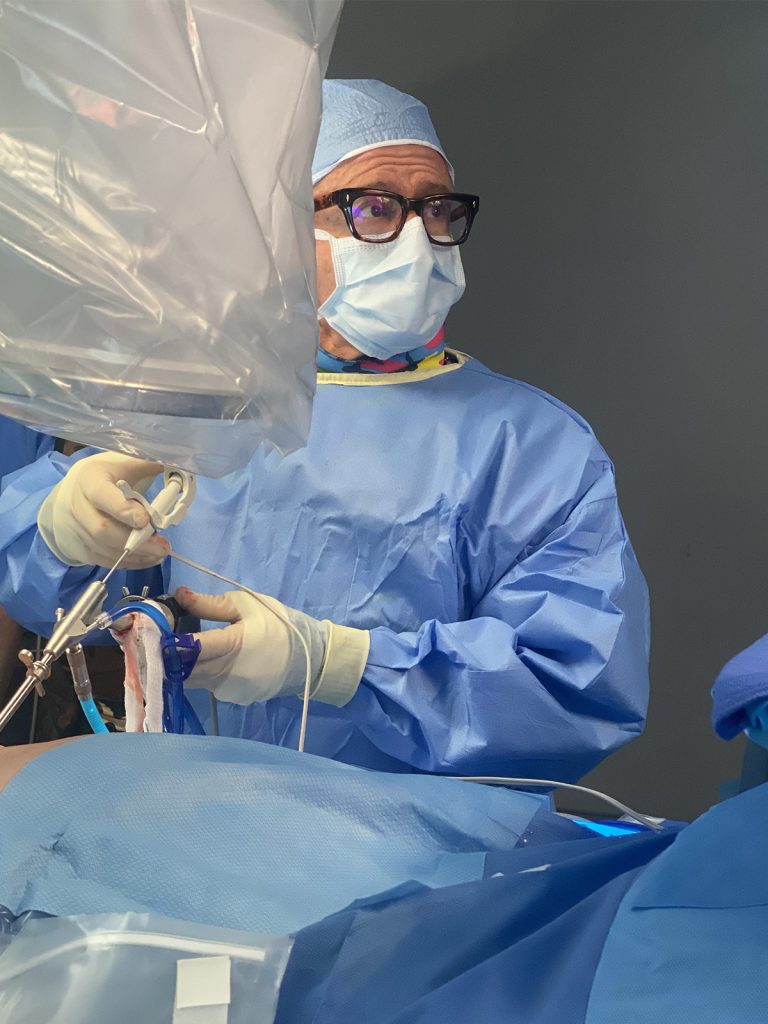
Living with Moderate to Severe Chronic Pain
In Canada, disc replacement surgery is plagued by:
- High costs
- Inexperienced surgeons
- Long wait times to be assessed
- Long wait times to schedule procedures
- Difficulty achieving authorization
- Inaccessibility
When patients suffer debilitating pain, numbness, tingling, or mobile impairment, being denied surgery or having non-surgical treatments pushed ahead due to cost containment can be detrimental to the patient’s health and allow their symptoms to worsen. Not only can pain worsen, prospective patients may lose sleep, see a decline in their ability to work or perform everyday tasks, and experience weakness or nerve damage. Chronic pain such as this leads to poor overall health.
By crossing the border into the US to see Dr. William Capicotto, MD, patients have the freedom to receive a proper diagnosis that puts patient-care first. Our aim is to restore your mobility so that you can get back to doing the things you love most.
Long Wait Times to Receive Health Care in Canada
Let’s talk numbers.
In 2019, the Canadian Pain Task Force was established to assess the current chronic pain rate in Canada. Their study estimated that 7.6 million, or one in five Canadians, live with chronic pain. Two-thirds of those people labeled their pain as moderate to severe, with half claiming they’ve experienced pain for 10+ years.
So why are more Canadians seeking treatment with Dr. Capicotto?
In 1993, Canadian patients could expect to wait around 9.3 weeks between getting a referral and receiving treatment.
According to a 2023 report by the Fraser Institute, there is now an average wait time of:
- 27.7 weeks across Canada
- 21.6 weeks in Ontario
- 6.6 weeks for a CT scan
- 12.9 weeks for an MRI scan
- 5.3 weeks for an ultrasound
- 28.9 – 44.3 weeks for orthopedic surgery or neurosurgery
When you’re experiencing chronic pain, muscle weakness, numbness or tingling, and other symptoms of a herniated, damaged, or degenerative disc, you don’t have 27 weeks to wait. Your discs could rapidly deteriorate, symptoms could increase and worsen, and it could even cause additional problems with the neighboring vertebrae, discs, muscles, and ligaments.